Lower costs, greater flexibility: the new path of IT modernisation
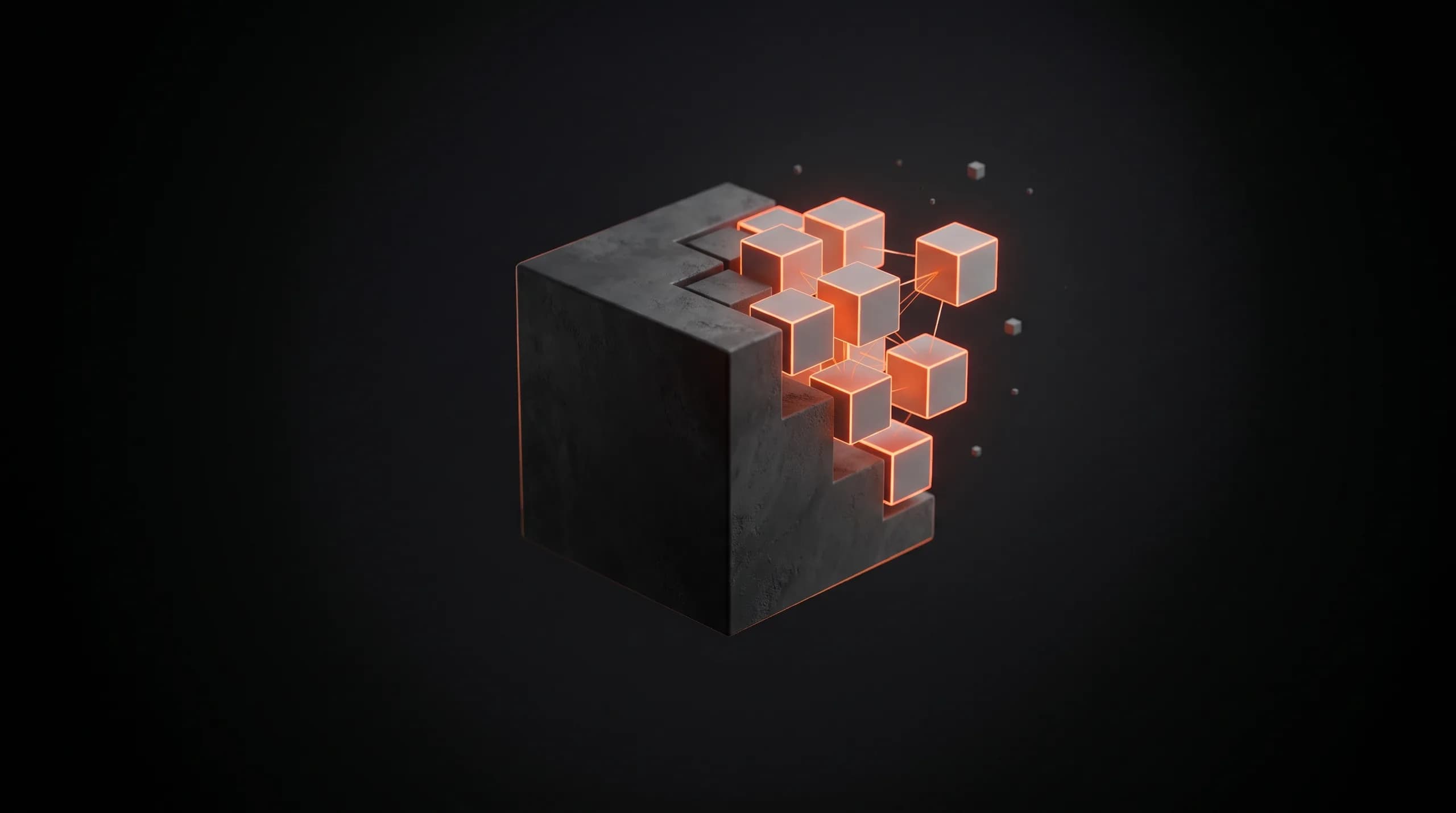
Modernising legacy systems no longer requires a one-off, high-risk system replacement: gradual transformation – microservices, composable ERP and a FinOps mindset – cuts costs while business operations continue undisturbed.
Modernising IT systems matters to every sensibly run company – but not at any price. The good news is that an upgrade today no longer necessarily means a one-off, large-scale system replacement. Gradual transformation makes it possible to cut costs while business operations continue undisturbed.
In many companies, the foundations of the IT environment are legacy systems that have been running for years or even decades, and maintaining them is an ever-growing burden. The problem is not only licence fees or ageing infrastructure: in systems that have been patched again and again, every new development takes more and more time and resources. These invisible costs significantly slow down the company's ability to adapt and increase operating expenses.
Micro-developments instead of a Big Bang
Modernisation is therefore essential, but how it is done matters a great deal. In the traditional „Big Bang” approach, the old system is replaced in a single step. Although this may seem simple at first, in practice it carries significant risk. The long development time, cost overruns and errors appearing at go-live can cause serious business problems.
Gradual modernisation, by contrast, allows the company to transform its systems step by step. One of the best-known methods is the Strangler Fig pattern: new functions are built on a modern architecture while the old system is gradually pushed into the background. With the so-called „incremental decoupling” approach, large monolithic applications can be broken down into smaller, independent components, so the transformation can be carried out without business downtime.
Microservice-based architectures play a key role in this process. Unlike the earlier, interdependent systems, microservices can be developed, tested and scaled independently. A similar mindset appears in composable ERP systems. Companies no longer need to tie themselves to one large platform. Instead, they can build flexible systems from different business functions, which can be developed or replaced according to current needs. This reduces vendor dependency and lowers the cost of future developments.
At the same time, modernisation is not only about applications. The FinOps mindset, which focuses on conscious management of cloud infrastructure costs, is playing an increasingly important role. Proper monitoring, automatic capacity management, optimising storage tiers and continuously reviewing cloud services can lead to substantial cost savings.
Following in the footsteps of the biggest
Several global technology companies provide good examples. Through the transformation of its architecture, Netflix gradually built up its microservice-based operation over many years, enabling greater flexibility and faster development cycles. Similarly, Amazon has applied a modular approach in many business areas, supporting more efficient use of resources and continuous innovation.
For companies, perhaps the most important realisation is that IT modernisation no longer necessarily means a multi-year, high-risk investment. By combining modern architectures, gradual migration models and the FinOps mindset, systems can be transformed step by step while business operations continue without interruption.