
Visible component vitality. Planned maintenance.
Vitality is a Mendix application built for monitoring manufacturing equipment: it tracks the life cycle of each component, forecasts replacements, and supports the day-to-day work of maintenance engineering.
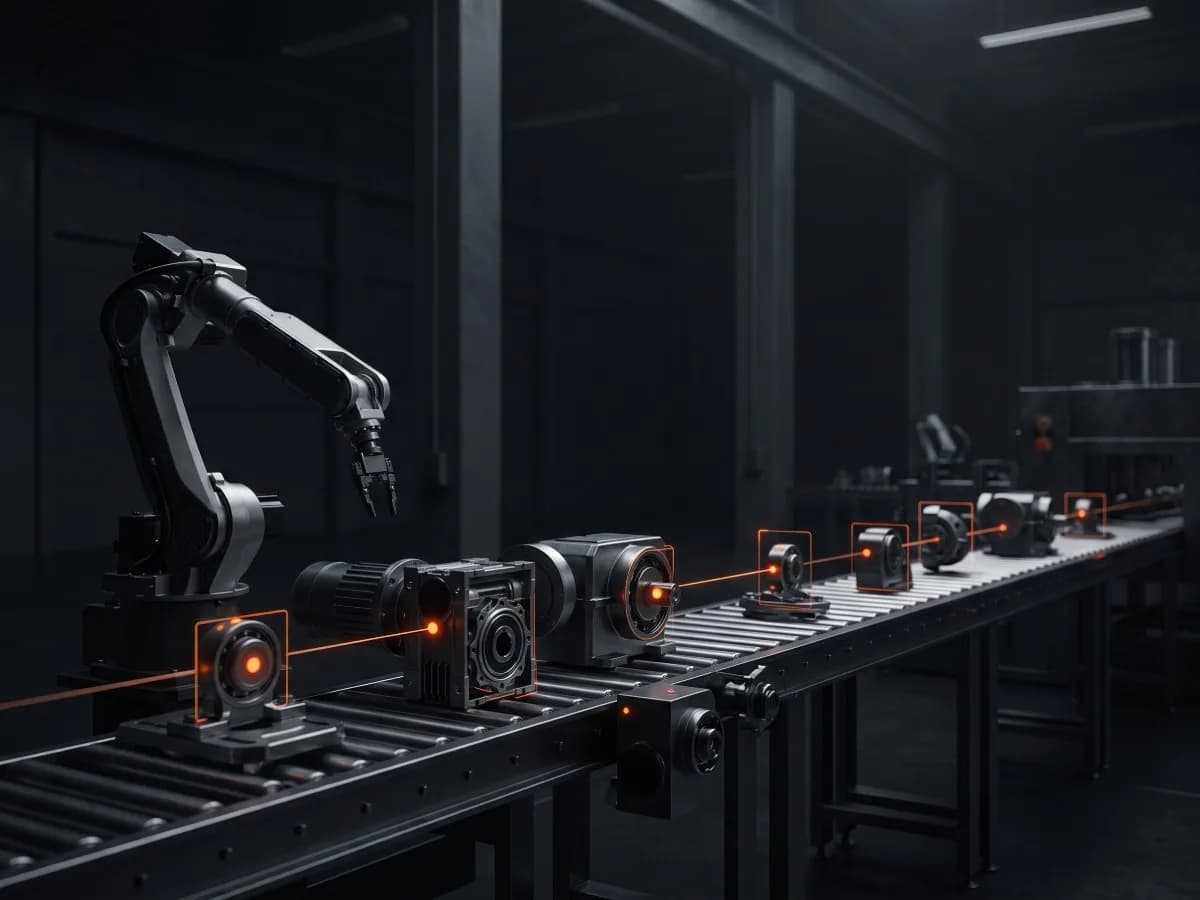

Measure the vitality of every component, machine and production line on one interface. Vitality updates automatically from your ERP and MES systems, helps prevent line stoppages by forecasting replacements and repairs, and connects maintenance with logistics, procurement and finance.
What does it cost when maintenance only reacts?
Unexpected line stoppages
If an ageing component fails prematurely, the line stops. The replacement is then dictated by the failure, not by the maintenance plan.
Unpredictable component demand
If you cannot see which component will wear out when, consumption and ordering cannot be planned either. Procurement and logistics react after the fact.
Untraceable maintenance work
If tasks are not in one place, maintenance is hard to delegate, and it cannot be verified afterwards what has been done.
Why are today's records not enough?
01 / Data
Scattered data
Component, production and financial data sit in separate systems, so engineering has no unified picture of the condition of a piece of equipment.
02 / Flexibility
Rigid software
With off-the-shelf solutions, engineering has to adapt to the software, and every change means a long development cycle.
03 / Finance
Isolated engineering
Maintenance costs are not visible in financial planning, so business decisions are not based on the real life cycle of the components.
The solution
Component Vitality Tracking
Vitality measures the vitality of every component and also shows the condition of machines, production lines and the equipment of a given area. The data updates automatically from the back-end systems.
Based on the life cycle, the system forecasts the necessary replacements and repairs and shows the expected maintenance costs, while engineers plan and track their daily work in the same place.
Replacements follow the plan, not the failure.
How does Vitality work?
Data updates
Component and production data update automatically from the ERP and MES systems.
Vitality measurement
The system measures the vitality of every component, machine and production line, and shows the condition of the equipment of a given area.
Replacement forecast
Components past their lifetime, and those wearing out in 3, 6 and 12 months, are listed.
Recording maintenance
The engineer records the repair or replacement and updates the component's lifetime.
Dashboard and reports
The dashboard shows equipment condition with trends; the reports summarise maintenance, suppliers and costs.
What can Vitality do?
1. Measurement and forecasting
Vitality measurement: for every component, machine and production line. Replacement forecast: forecasting replacements and repairs, supporting planning. Cost reporting: expected maintenance costs based on the components' life cycle.
2. Work and verification
Engineering work planning: planning and tracking daily work. Supplier verification: quality assurance of components and their suppliers. Reports: maintenance, component suppliers, financial checks.
3. Integration and customisation
Automatic data updates: integration with the back-end systems (ERP, MES). Customisability: can be adapted to how your engineering team works.
What does the factory gain?
Fewer unexpected stoppages
Preventive replacement of components helps avoid line stoppages.
Plannable component supply
Consumption and ordering can be planned in advance, because you can see what will wear out and when.
Verifiable maintenance
Maintenance can be delegated, the maintenance team's work can be supported and verified afterwards.
Transparent equipment condition
The vitality level of an area's equipment is visible at a glance, with trends on the dashboard.
Connected departments
Engineering, logistics, procurement and finance work from the same data.
A factory-wide process
With Vitality, a maintenance process covering the entire factory can be introduced.
Low-code in practice
How Vitality was built
On Mendix, in one-week sprints, together with an industry expert.
01Built on Mendix
Vitality was built on the Mendix low-code platform using a rapid software development method.
02A joint team
The development was carried out jointly by a BlackBelt Mendix developer and a Siemens industry expert. The developer built the software, and the expert contributed the industry knowledge.
03One-week sprints
At the end of every week, a demo presented the new prototype. The expert requested new features or changes on the working software and received them the following week.
04Prototype in 6 weeks
The first working version was completed in six weeks, after six one-week sprints.
05Rolled out the same way
We also introduce Vitality at the customer using the rapid method. The system can be customised, extended and integrated with existing systems.
Let's take the next step
Make your maintenance plannable!
Request a demo, and let's look together at how Vitality can be adapted to the way your engineering team works.
Contact us
- Phone:
- +36 1 611 0462
- Email:
- info@blackbelt.hu